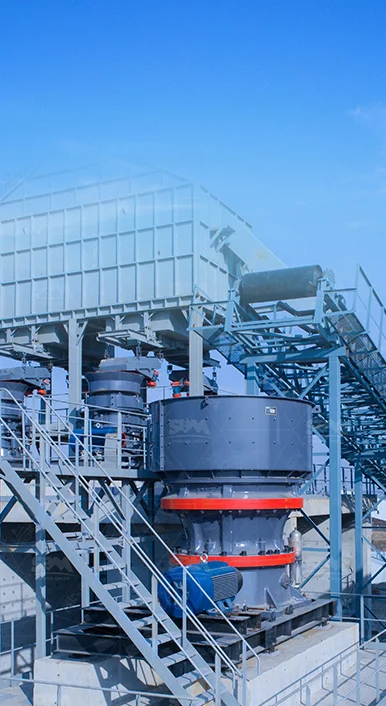
Four process routes cover almost every duty we are asked for: aggregate crushing, industrial powder grinding, cement and lime calcining, and mineral beneficiation. Each is engineered from a material test, not a template.
Most lines that underperform do so at the interfaces: a crusher that feeds a mill it was never sized for, a conveyor that bottlenecks the screen. Because we make every machine in the circuit, the interface dimensions and capacities are guaranteed together.
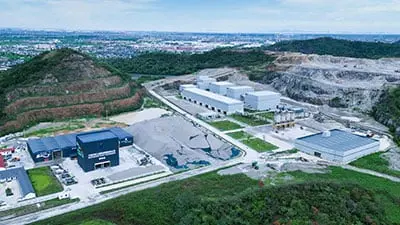 Solution 01 · Aggregate
For limestone, granite, basalt, river gravel and construction waste. Three-stage crushing with dry or wet sand classification, producing 0–5, 5–10, 10–20 and 20–31.5 mm aggregates plus M-sand at 2.6–3.0 fineness modulus.
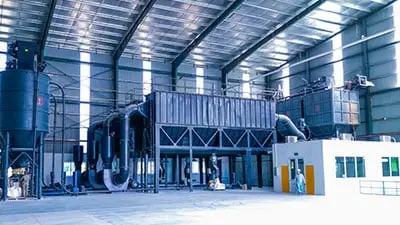 Solution 02 · Powder
For limestone, calcite, barite, kaolin, gypsum, bauxite, slag and petroleum coke. The mill is chosen against the Hardgrove index and the target residue: Raymond or trapezium for 80–400 mesh, HGM for 400–1250, ultrafine for 1250–2500 mesh.
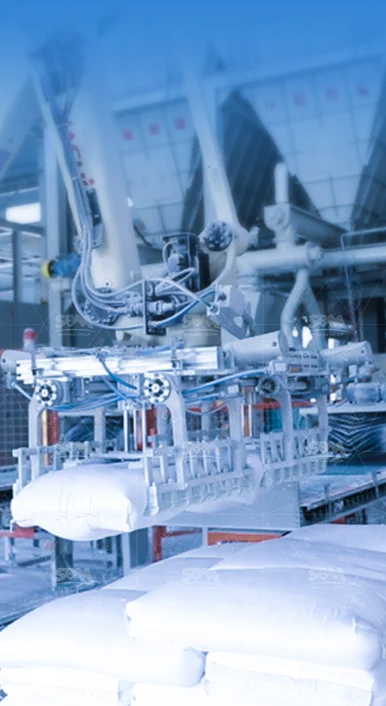 Solution 03 · Calcining
Rotary kiln lines for cement clinker, quicklime, dolomite, bauxite and gypsum. Five-stage preheater with calciner for clinker; long dry kiln with vertical preheater for lime. Waste-heat recovery available as an option.
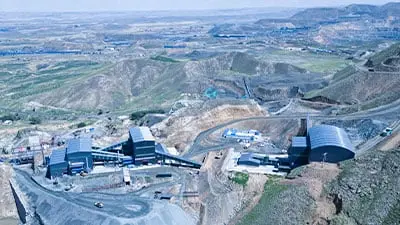 Solution 04 · Beneficiation
For gold, copper, iron, lead-zinc, fluorite and graphite ores. Gravity, flotation and magnetic separation combined according to the liberation size from your assay report, with tailings thickening and water recovery.
Grindability, abrasion, moisture and bulk density from a 20–50 kg sample, with a written process recommendation.
Mass and energy balance, equipment list with 10% margin, and a guaranteed performance figure.
2D/3D layout, foundation loads, cable routing and steel structure drawings for your local contractor.
Supervision, commissioning, operator training and 72-hour performance run before sign-off.
We will reply with a process route, a capacity guarantee and an indicative budget — before you commit to anything.
