Products Description
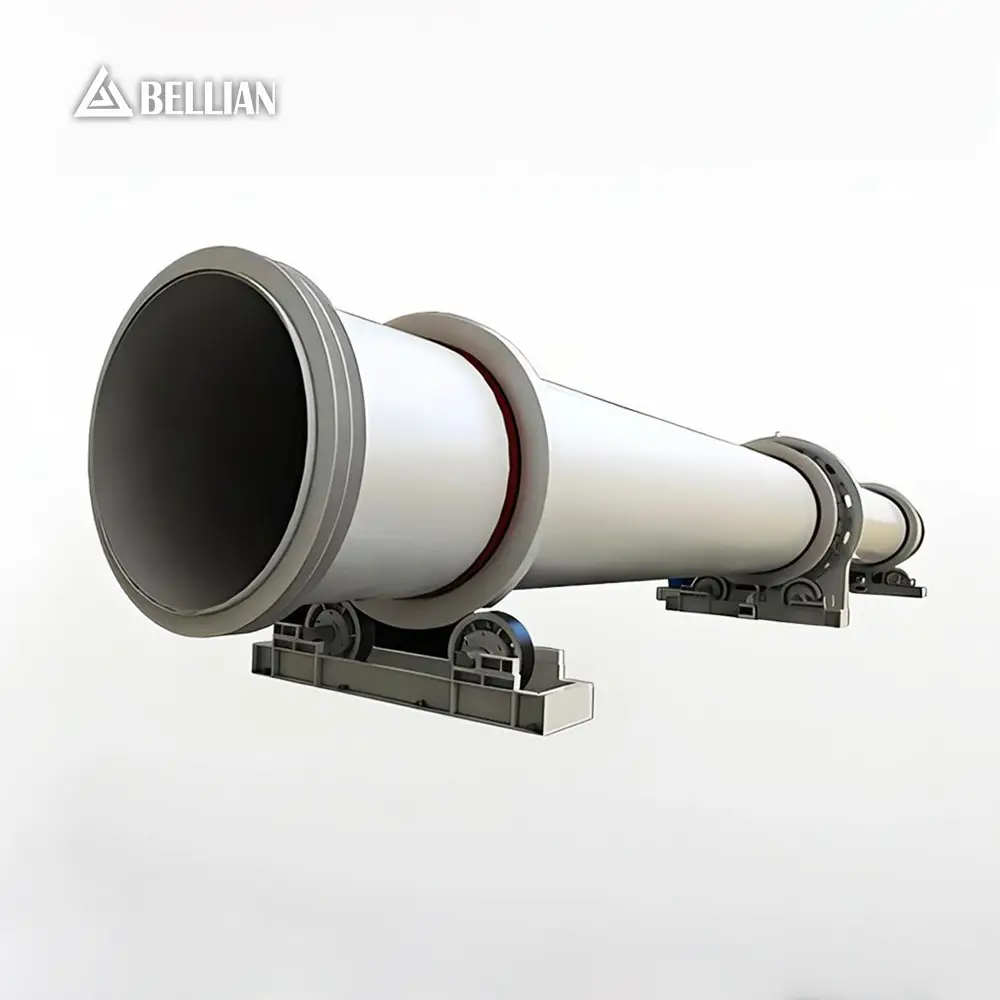
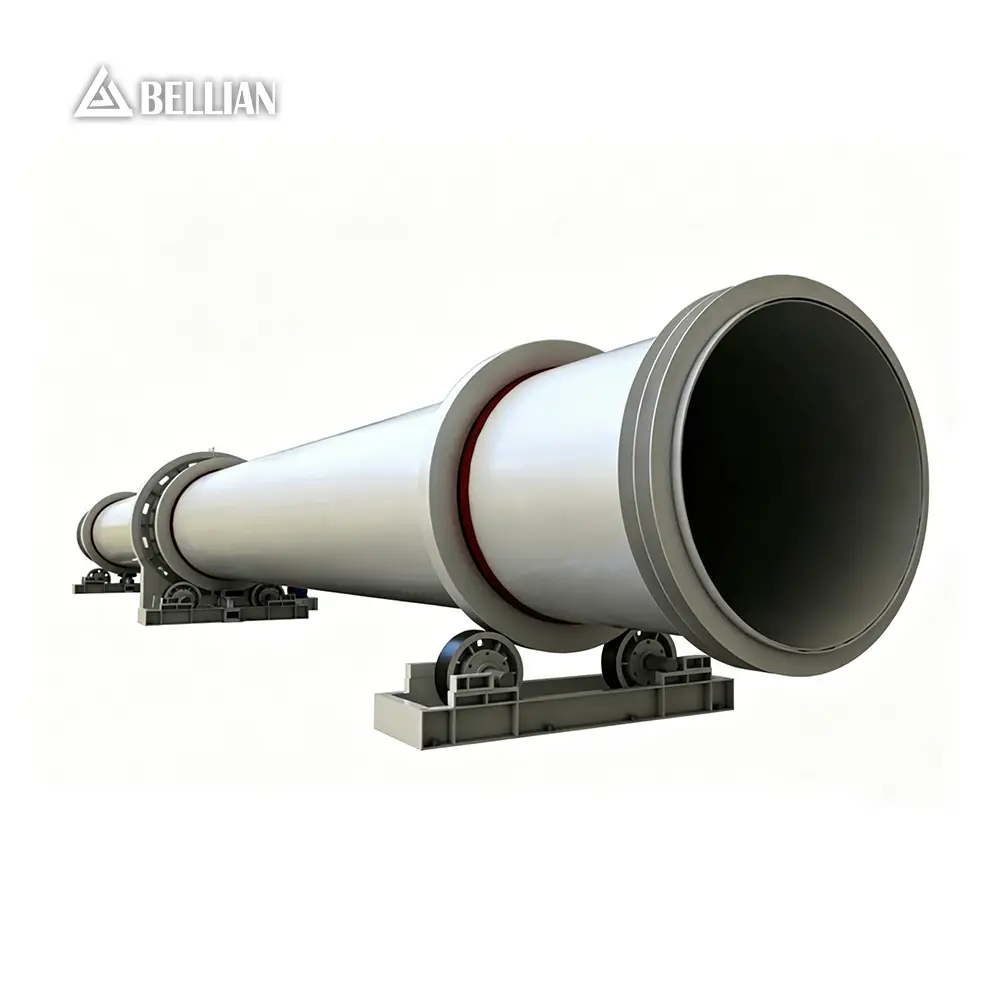
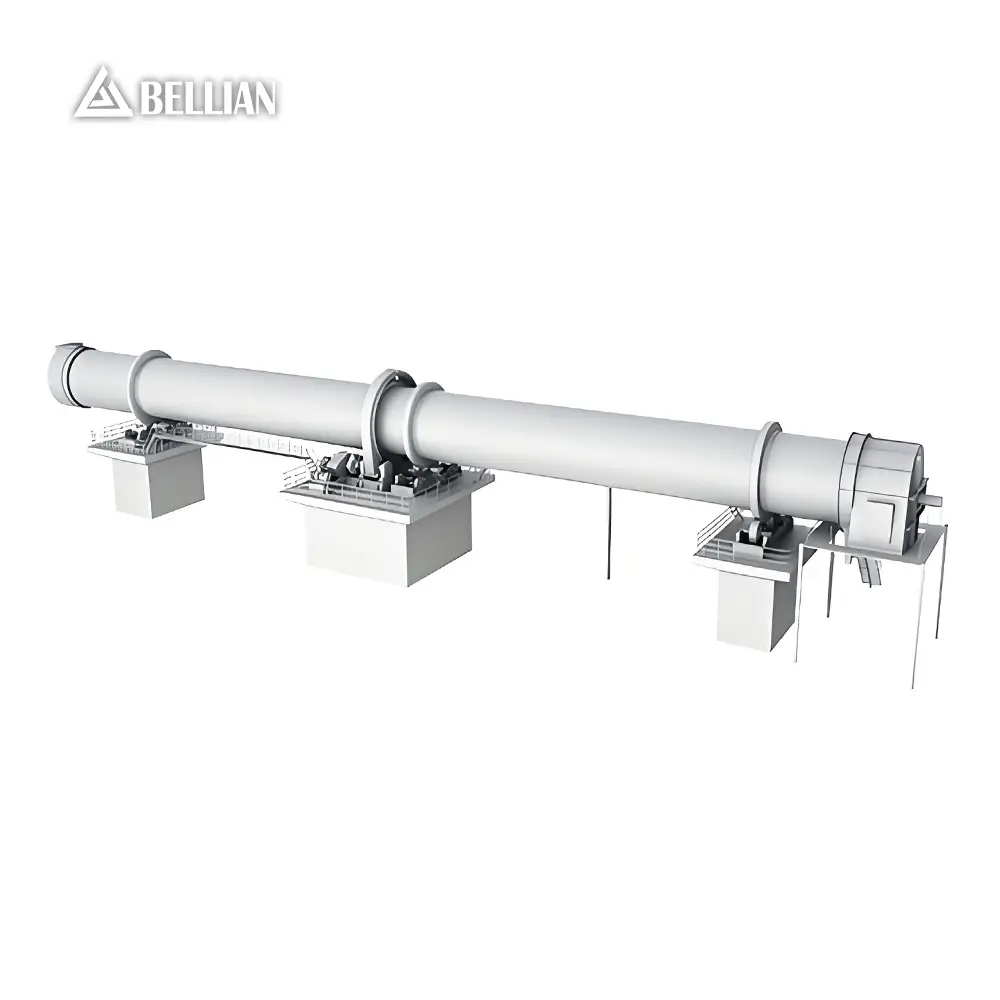
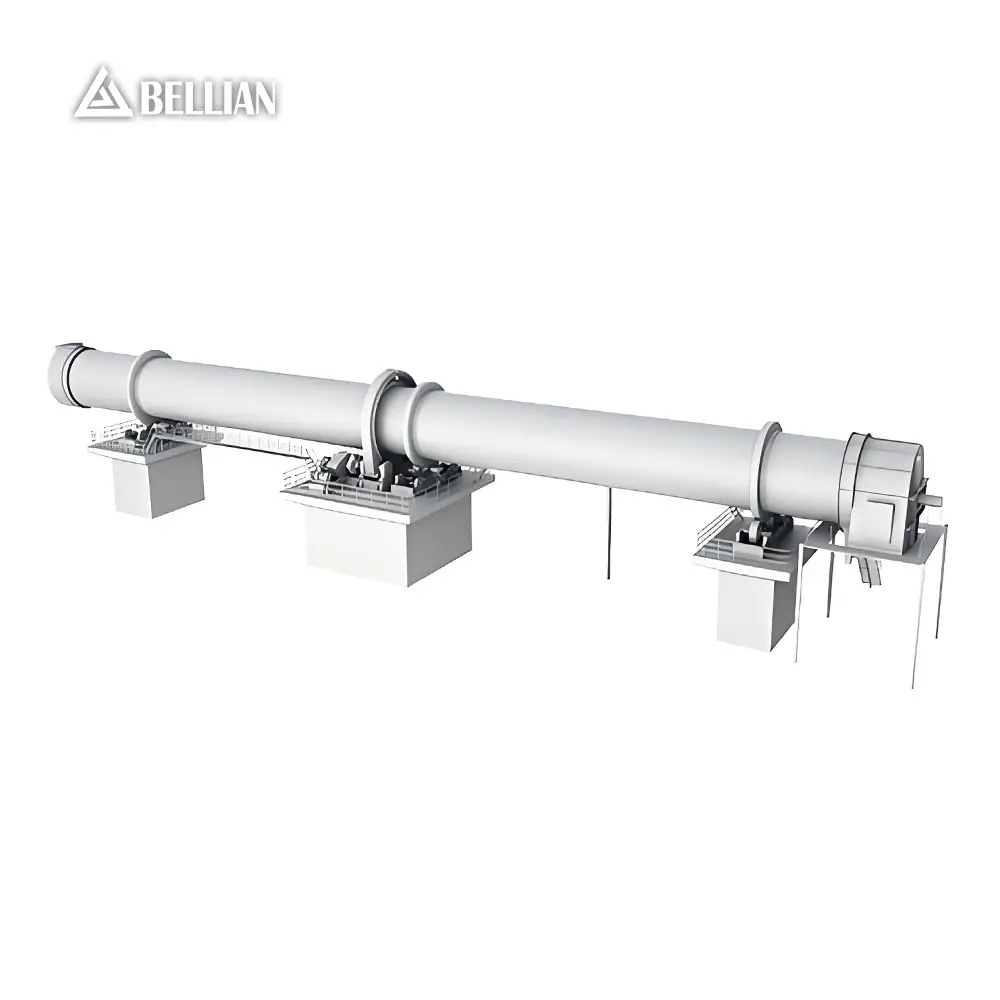
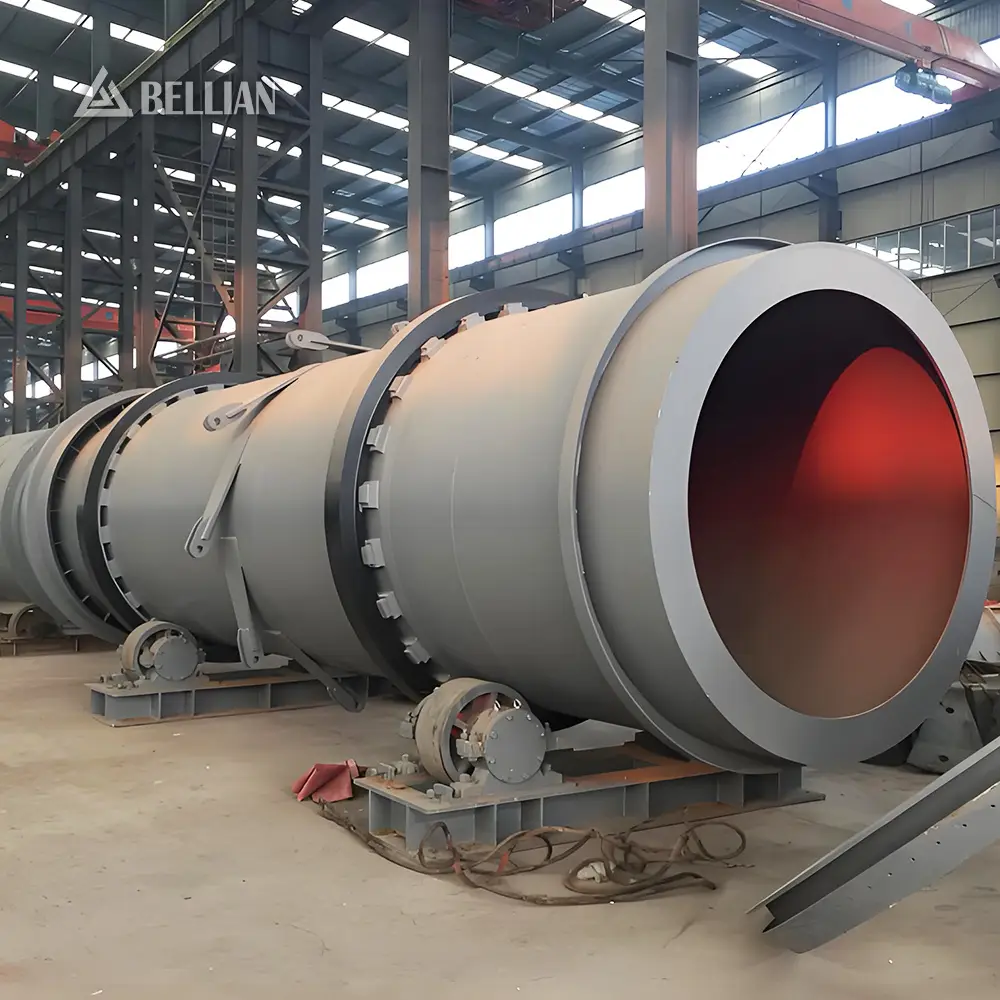
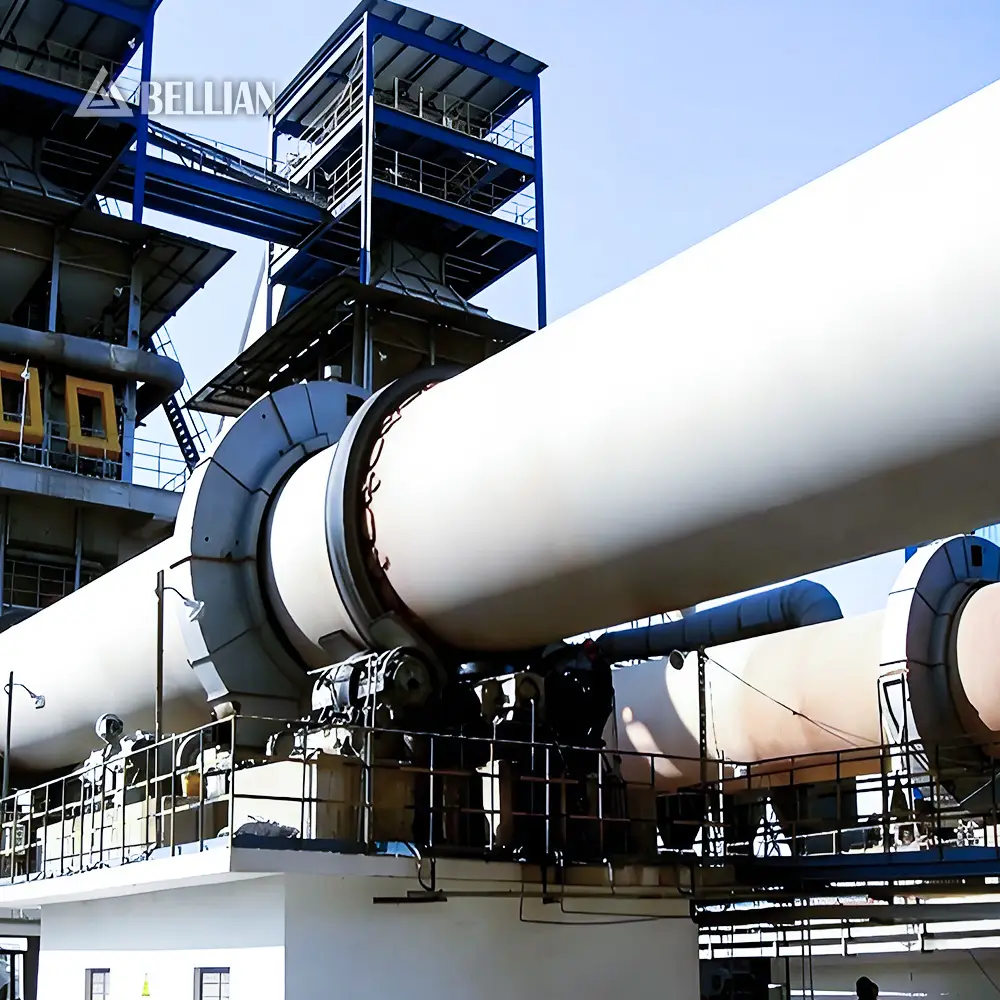
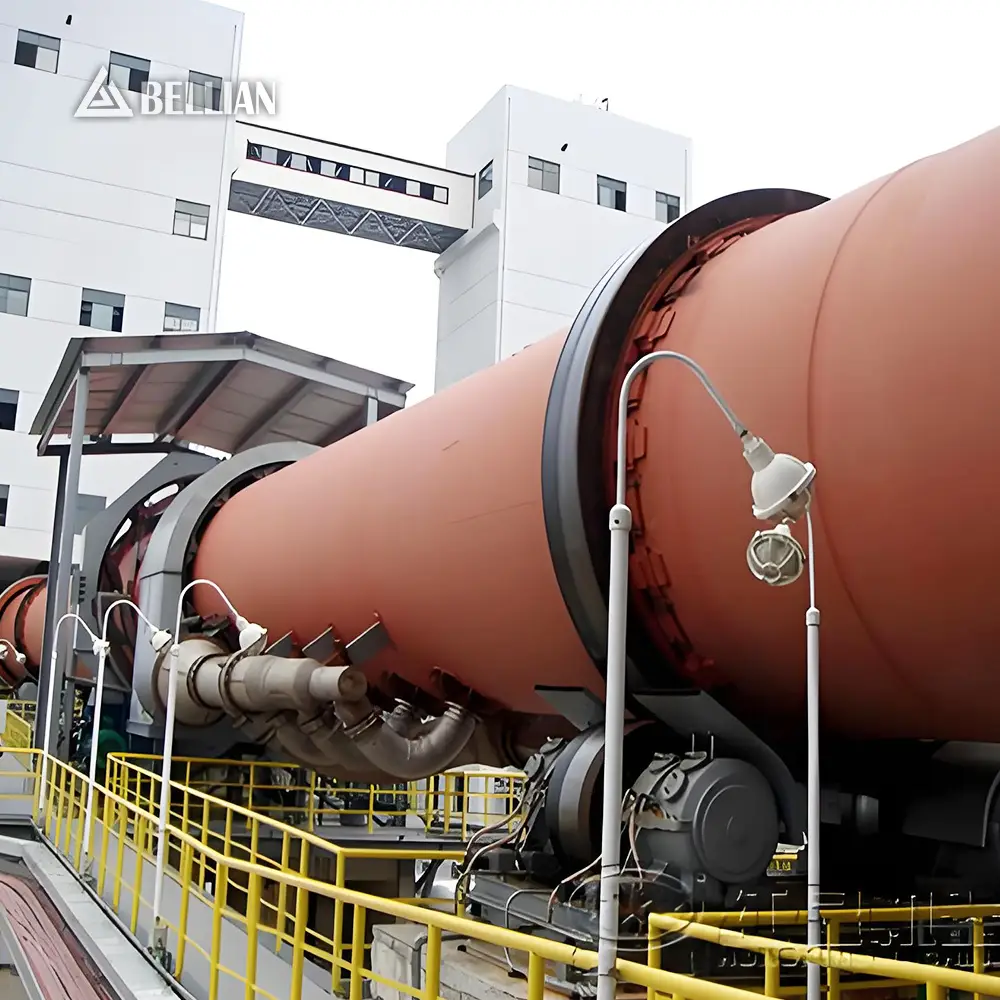
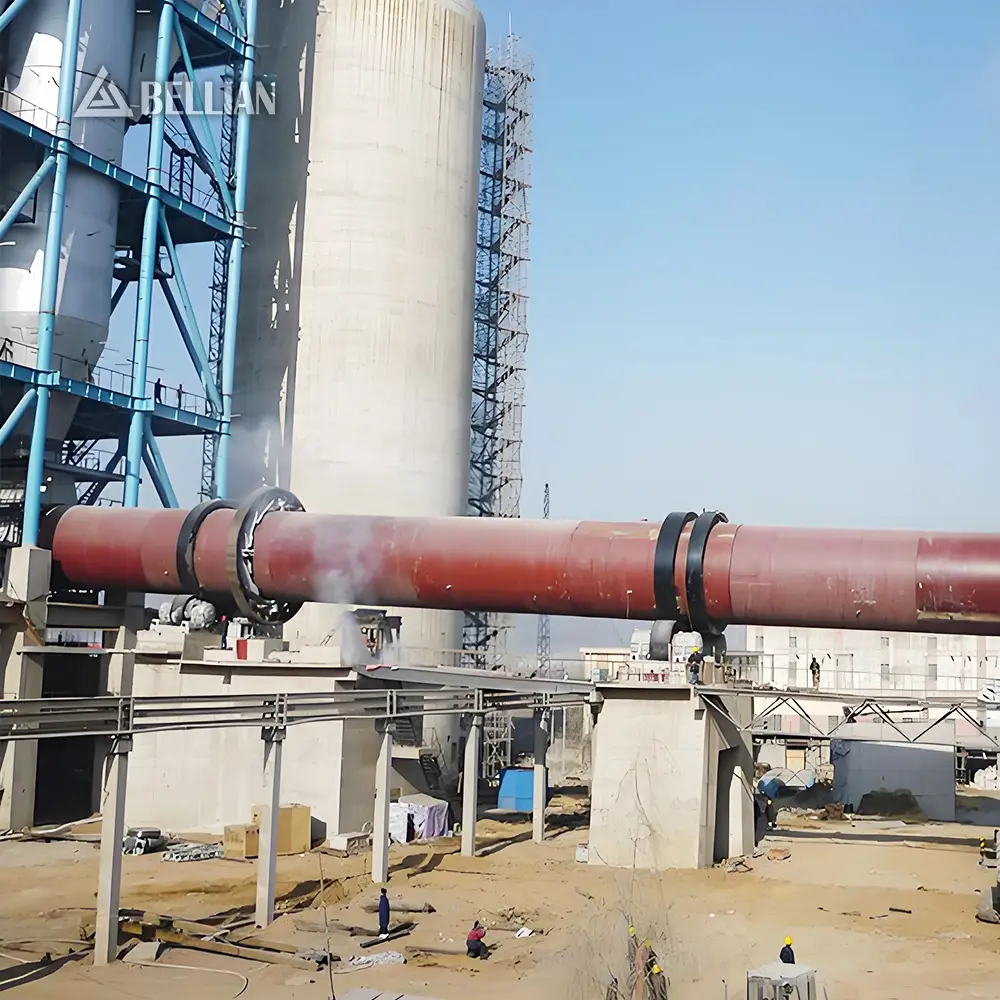
Bellian Cement Rotary Kiln is the core equipment for cement clinker production, widely used in large and medium-sized cement plants. It is also suitable for calcining lime, dolomite and other materials. Our rotary kiln adopts advanced structure design and high-quality refractory materials, which improves thermal efficiency by 15% compared with traditional models. The thickened steel plate cylinder and reinforced supporting roller system ensure stable operation for more than 20 years under high temperature and heavy load conditions.
Working Principle
The cement rotary kiln is a slightly inclined horizontal rotating cylinder. Raw meal powder is fed into the higher end of the kiln. As the kiln rotates, the raw meal moves towards the lower end under the action of gravity and rotation. At the lower end, the burner injects fuel to generate high-temperature flame. The raw meal is heated through countercurrent heat exchange, undergoing drying, preheating, decomposition, calcination and cooling processes, and finally becomes cement clinker. The clinker is discharged from the lower end and enters the cooler for rapid cooling.
Performance Features
Thickened Q345 steel plate cylinder, reinforced supporting roller and riding wheel, strong bearing capacity, long service life
High-quality refractory bricks and castables, good thermal insulation performance, reducing heat loss
Advanced hydraulic thrust roller system, automatically adjusts the axial position of the kiln body, ensuring stable operation
Frequency conversion speed regulation system, can adjust the rotation speed according to different production requirements
Equipped with advanced temperature and pressure monitoring system, real-time monitoring of kiln operating conditions
Wide capacity range from 200 t/d to 6000 t/d, suitable for small, medium and large cement plants
Technical Specifications
| Product Specification | Kiln Body Dimensions | Motor Power(kw) | Total Weight(t) | Remarks | ||||
| Diameter(m) | Length(m) | Inclination(%) | Capacity(t/d) | Rotating Speed(r/min) | ||||
| Φ2.5×40 | 2.5 | 40 | 3.5 | 180 | 0.44-2.44 | 55 | 149.61 | |
| Φ2.5×50 | 2.5 | 50 | 3 | 200 | 0.62-1.86 | 55 | 187.37 | |
| Φ2.5×54 | 2.5 | 54 | 3.5 | 280 | 0.48-1.45 | 55 | 196.29 | Pre‑calciner Kiln |
| Φ2.7×42 | 2.7 | 42 | 3.5 | 320 | 0.10-1.52 | 55 | 198.5 | |
| Φ2.8×44 | 2.8 | 44 | 3.5 | 450 | 0.437-2.18 | 55 | 201.58 | Pre‑calciner Kiln |
| Φ3.0×45 | 3 | 45 | 3.5 | 500 | 0.5-2.47 | 75 | 201.94 | |
| Φ3.0×48 | 3 | 48 | 3.5 | 700 | 0.6-3.48 | 100 | 237 | Pre‑calciner Kiln |
| Φ3.0×60 | 3 | 60 | 3.5 | 800 | 0.3-2 | 100 | 310 | |
| Φ3.2×50 | 3.5 | 50 | 4 | 1000 | 0.6-3 | 125 | 278 | Pre‑calciner Kiln |
| Φ3.3×52 | 3.3 | 52 | 3.5 | 1300 | 0.266-2.66 | 125 | 283 | Preheating & Calcining Kiln |
| Φ3.5×54 | 3.5 | 54 | 3.5 | 1500 | 0.55-3.4 | 220 | 363 | |
| Φ3.6×70 | 3.6 | 70 | 3.5 | 1800 | 0.25-1.25 | 125 | 419 | |
| Φ4.0×56 | 4 | 56 | 4 | 2300 | 0.41-4.07 | 315 | 456 | |
| Φ4.0×60 | 4 | 60 | 3.5 | 2500 | 0.396-3.96 | 315 | 510 | |
| Φ4.2×60 | 4.2 | 60 | 4 | 2750 | 0.41-4.07 | 375 | 633 | |
| Φ4.3×60 | 4.3 | 60 | 3.5 | 3200 | 0.396-3.96 | 375 | 583 | |
| Φ4.5×66 | 4.5 | 66 | 3.5 | 4000 | 0.41-4.1 | 560 | 710.4 | |
| Φ4.7×74 | 4.7 | 74 | 4 | 4500 | 0.35-4 | 630 | 849 | |
| Φ4.8×74 | 4.8 | 74 | 4 | 5000 | 0.396-3.96 | 630 | 899 | |
| Φ5.0×74 | 5 | 74 | 4 | 6000 | 0.35-4 | 710 | 944 | |
| Φ5.6×87 | 5.6 | 87 | 4 | 8000 | Max4.23 | 800 | 1265 | |
| Φ6.0×95 | 6 | 95 | 4 | 10000 | Max5 | 950×2 | 1659 | |
Application Scenarios
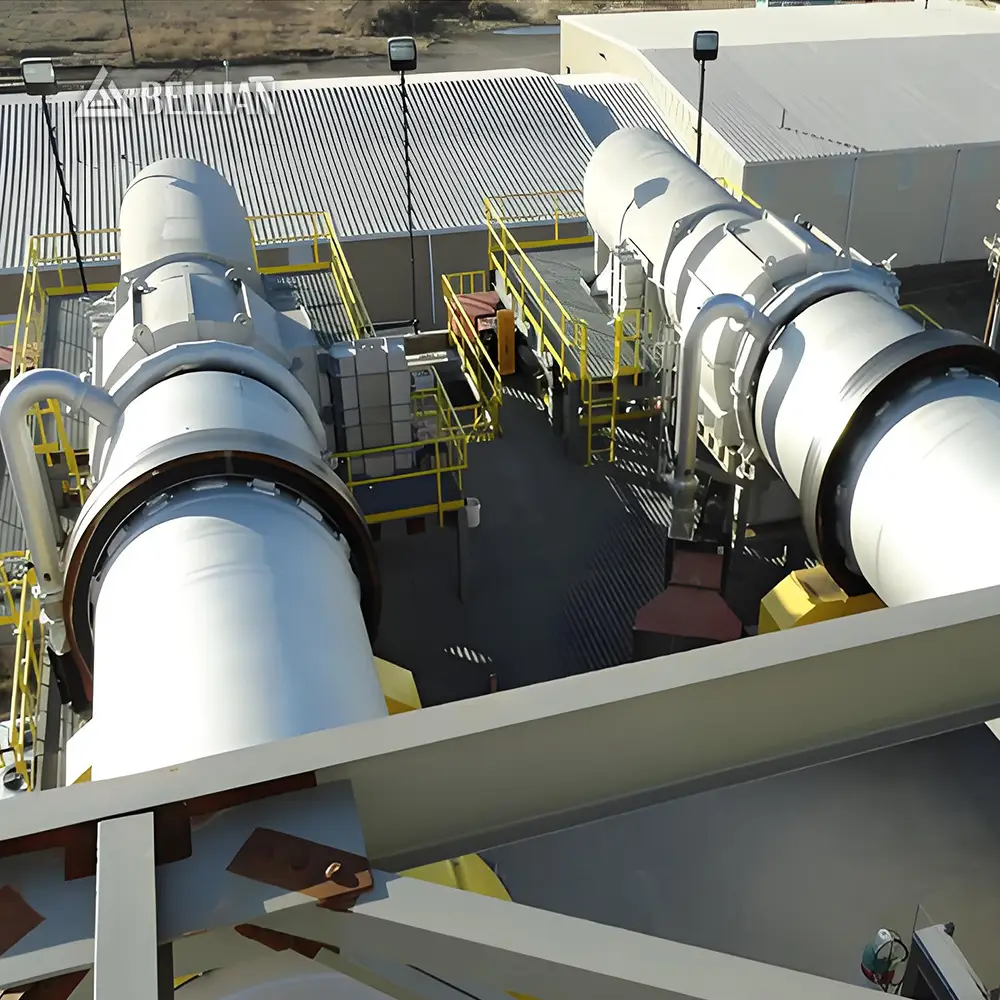
Mainly used in cement plants for clinker calcination. Also widely used in metallurgy, chemical industry, building materials and other industries for calcining lime, dolomite, bauxite, magnesite and other materials. It is the key equipment in the cement production process.
Buying Guide
When choosing a cement rotary kiln, you should consider: 1. The required daily production capacity; 2. The type and quality of raw materials; 3. The local fuel supply and price; 4. The site conditions and environmental protection requirements. We can provide customized solutions according to your specific needs.
FAQ
What is the service life of the cement rotary kiln?
With proper maintenance, the service life of our cement rotary kiln can reach more than 20 years. The cylinder and supporting system can be used for a long time, while the refractory bricks need to be replaced every 2-3 years according to the operating conditions.
What fuels can be used in the rotary kiln?
Our rotary kiln can use various fuels such as coal, natural gas, heavy oil and biomass fuel. We can design the burner system according to the fuel you use to ensure the best combustion effect and thermal efficiency.
Do you provide installation and commissioning services?
Yes, we can send a professional engineering team to your site to guide installation and commissioning, and train your operators. We also provide 12 months warranty and lifetime technical support.
Can you provide a complete cement production line solution?
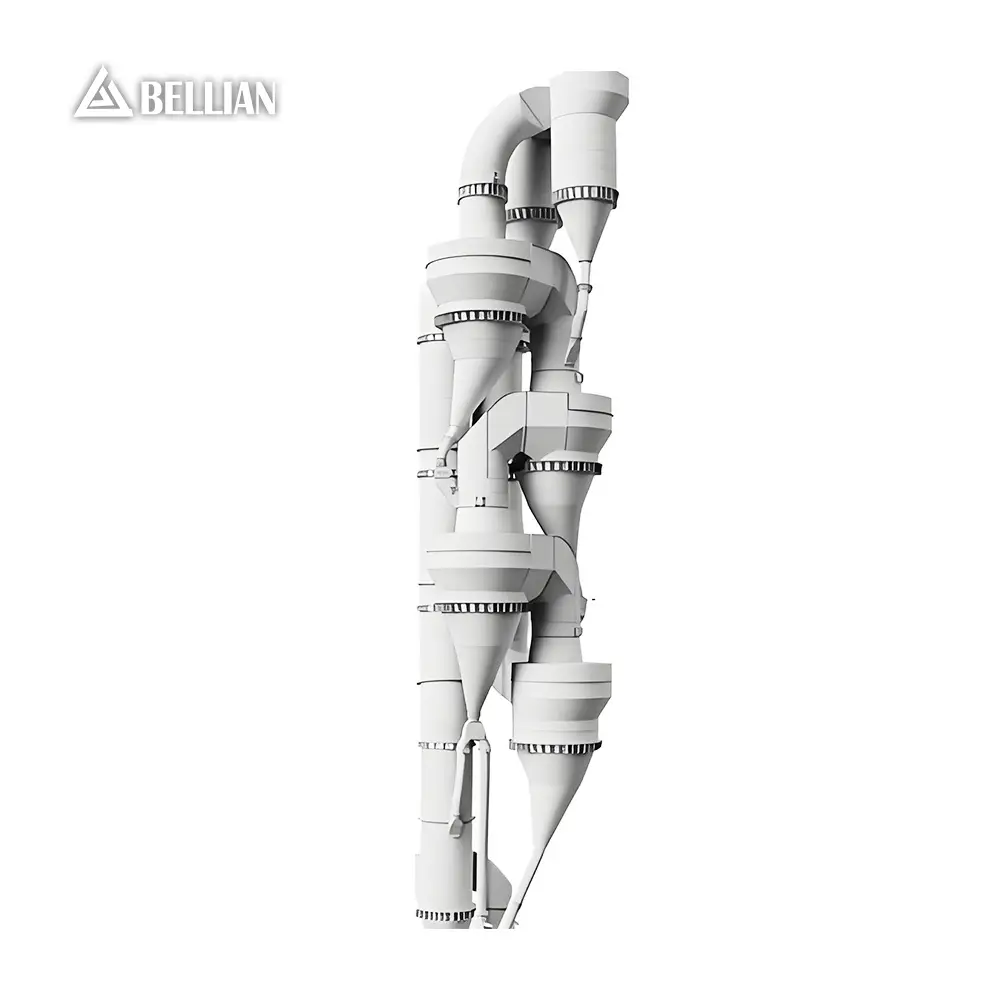
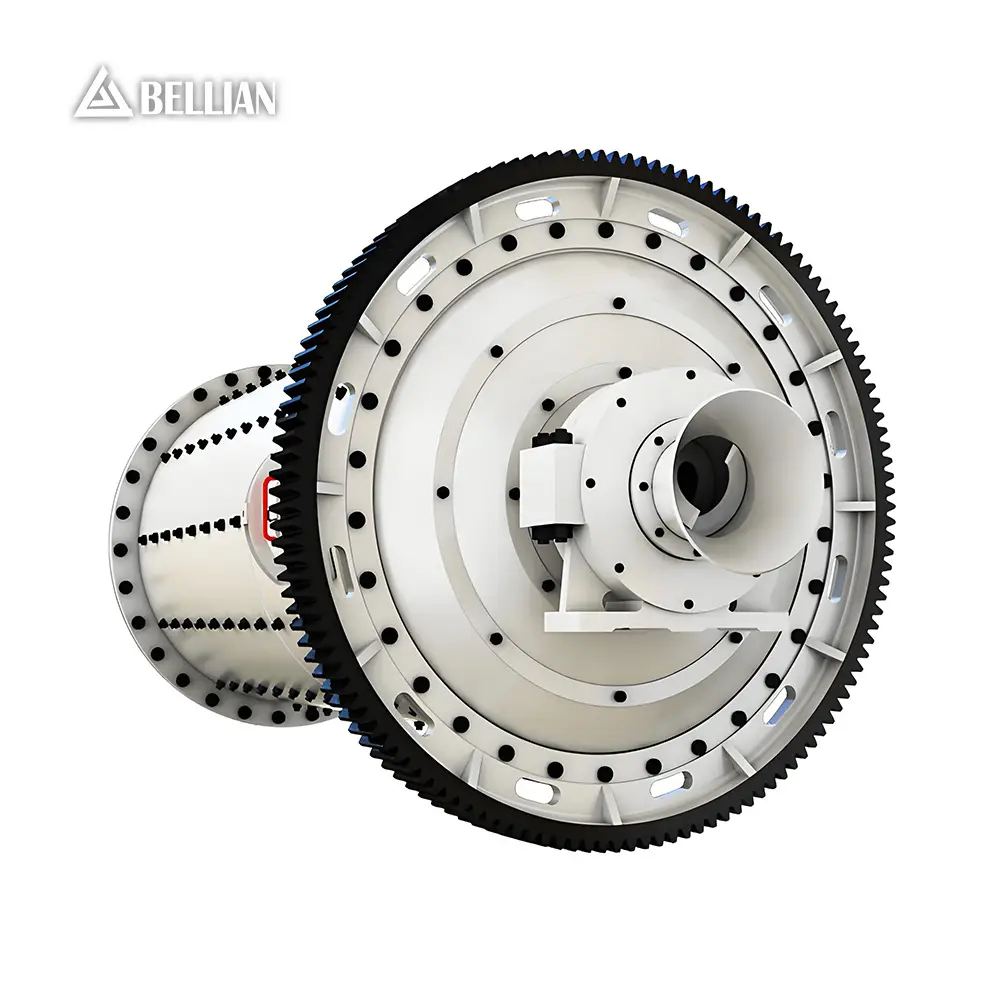
Yes, we can provide turnkey solutions for complete cement production lines including raw material crushing, grinding, preheating, calcination, clinker cooling, cement grinding and packaging. From design to operation, we provide one-stop service.