Products Description
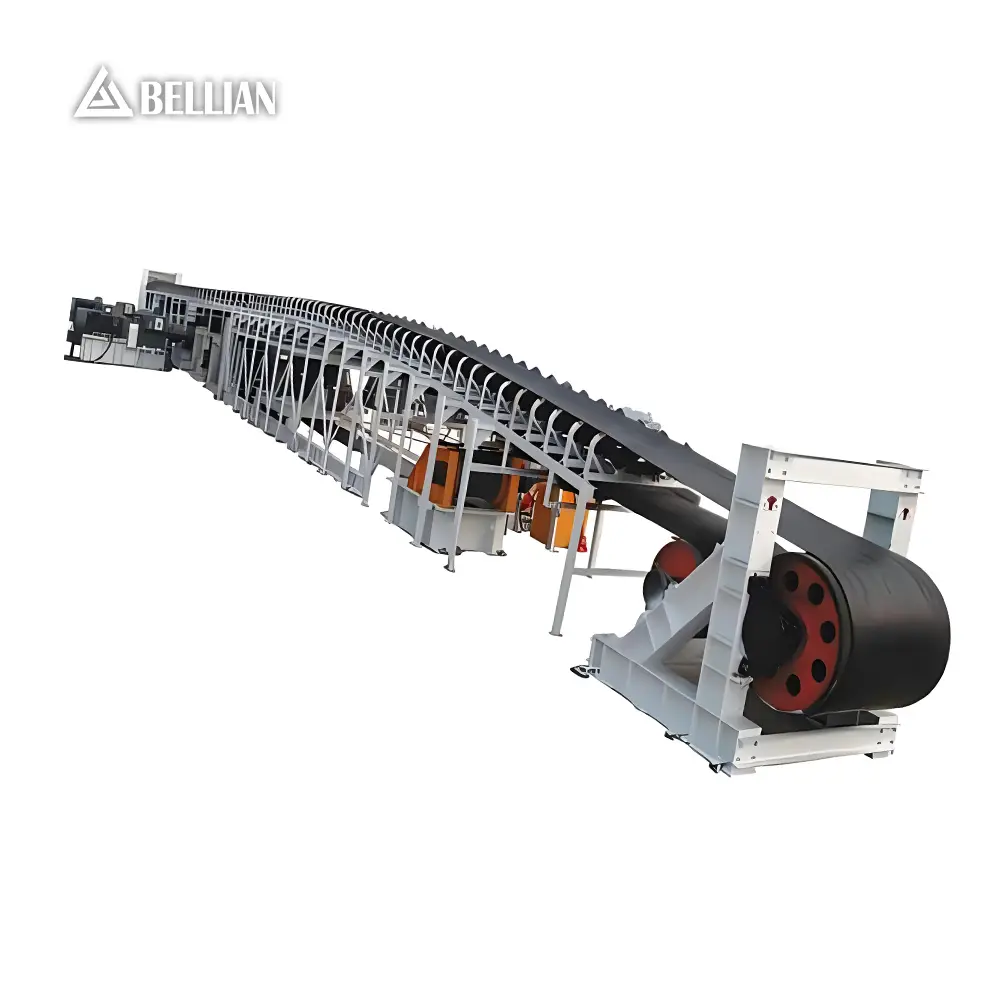
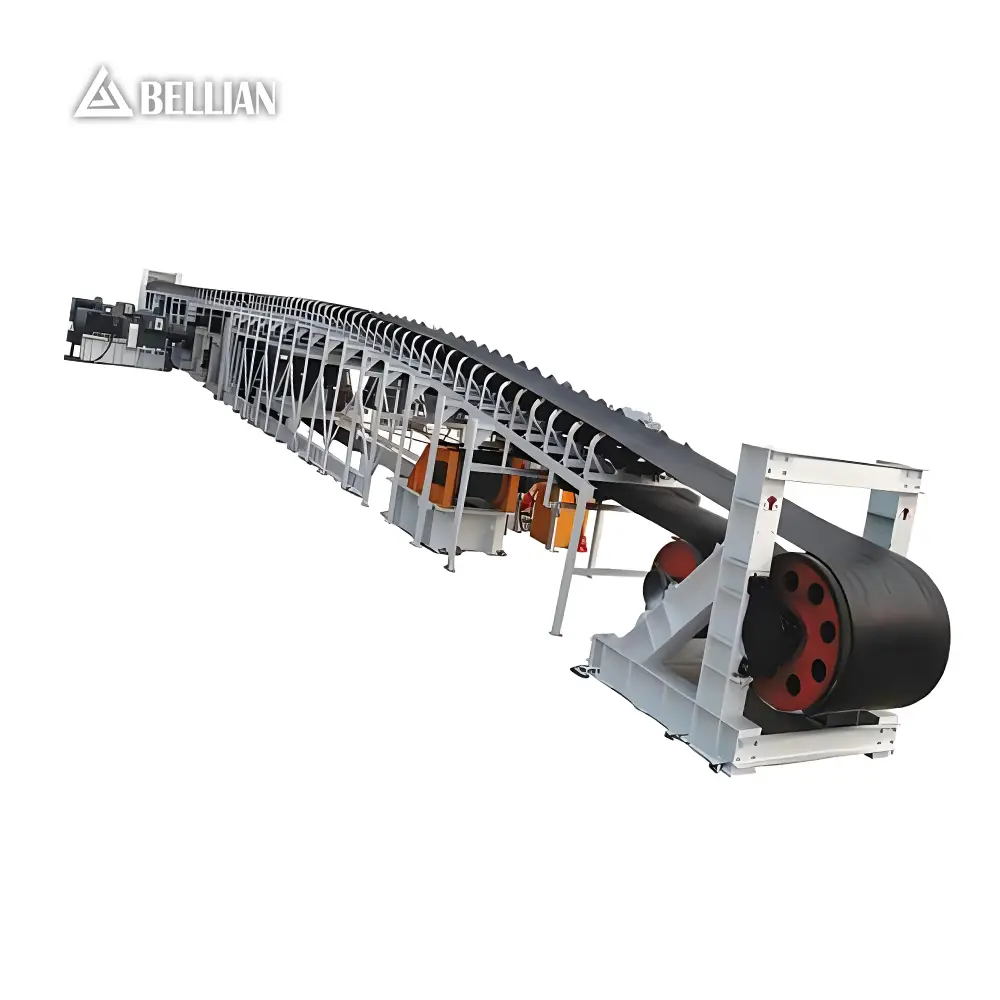
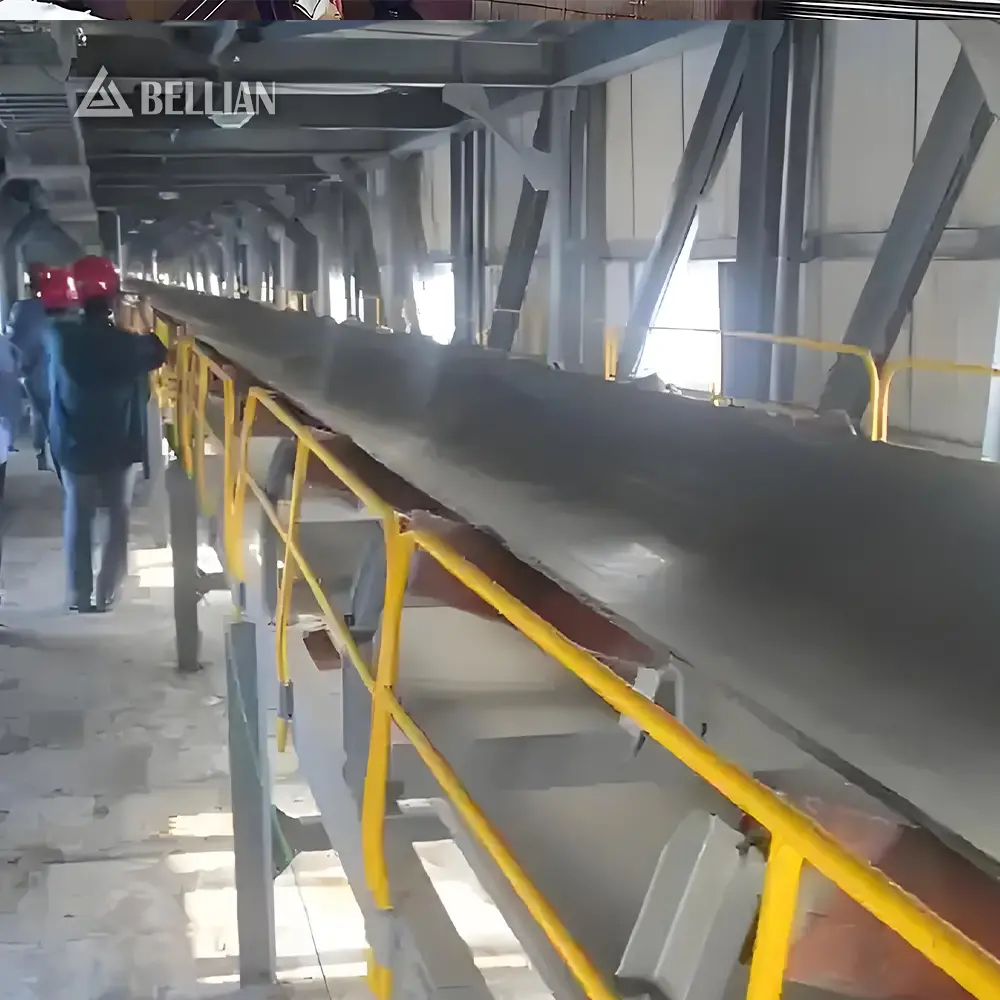
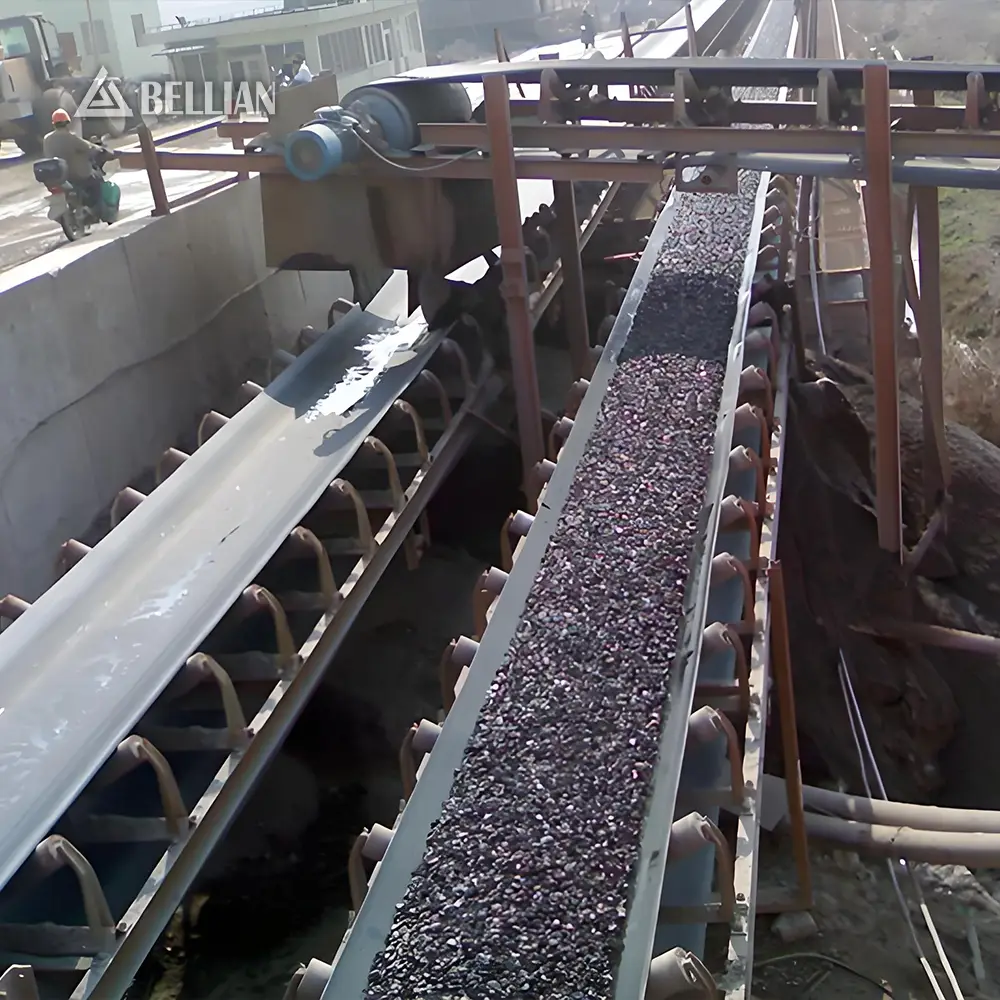
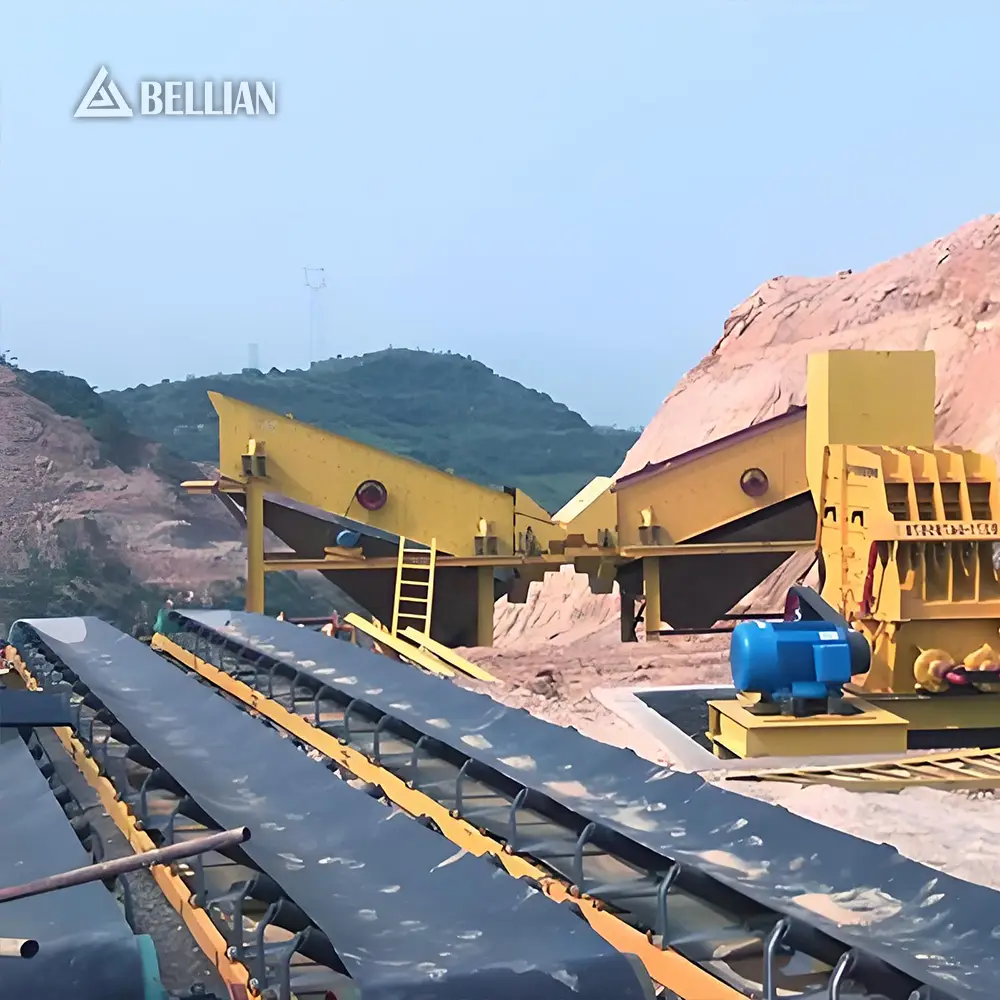
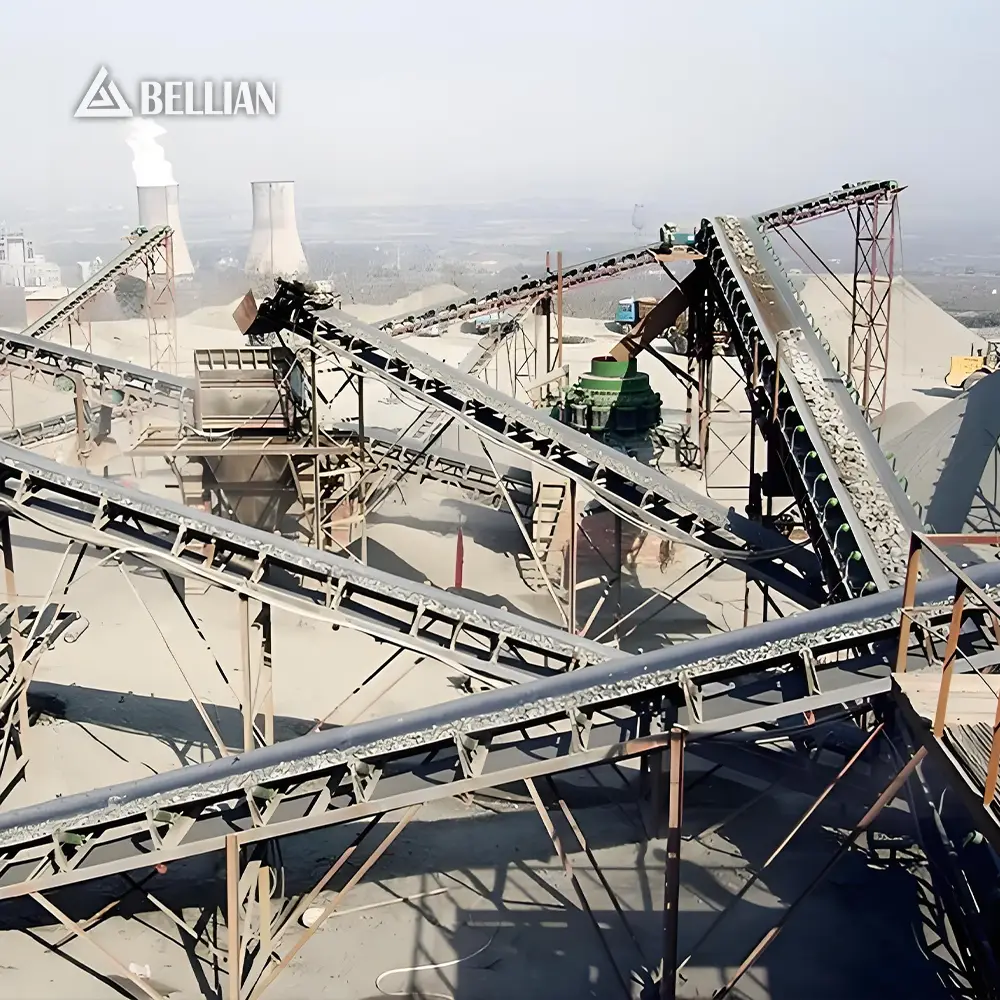
Bellian Belt Conveyor is the most widely used material handling equipment in industrial production. It is used for horizontal or inclined transportation of various bulk materials and finished products. Our belt conveyor adopts advanced structure design and high-quality rubber belt, which has stable operation, long service life and low maintenance cost. It can be designed as fixed type or mobile type according to different requirements, and can be combined with other equipment to form a complete material handling system.
Working Principle
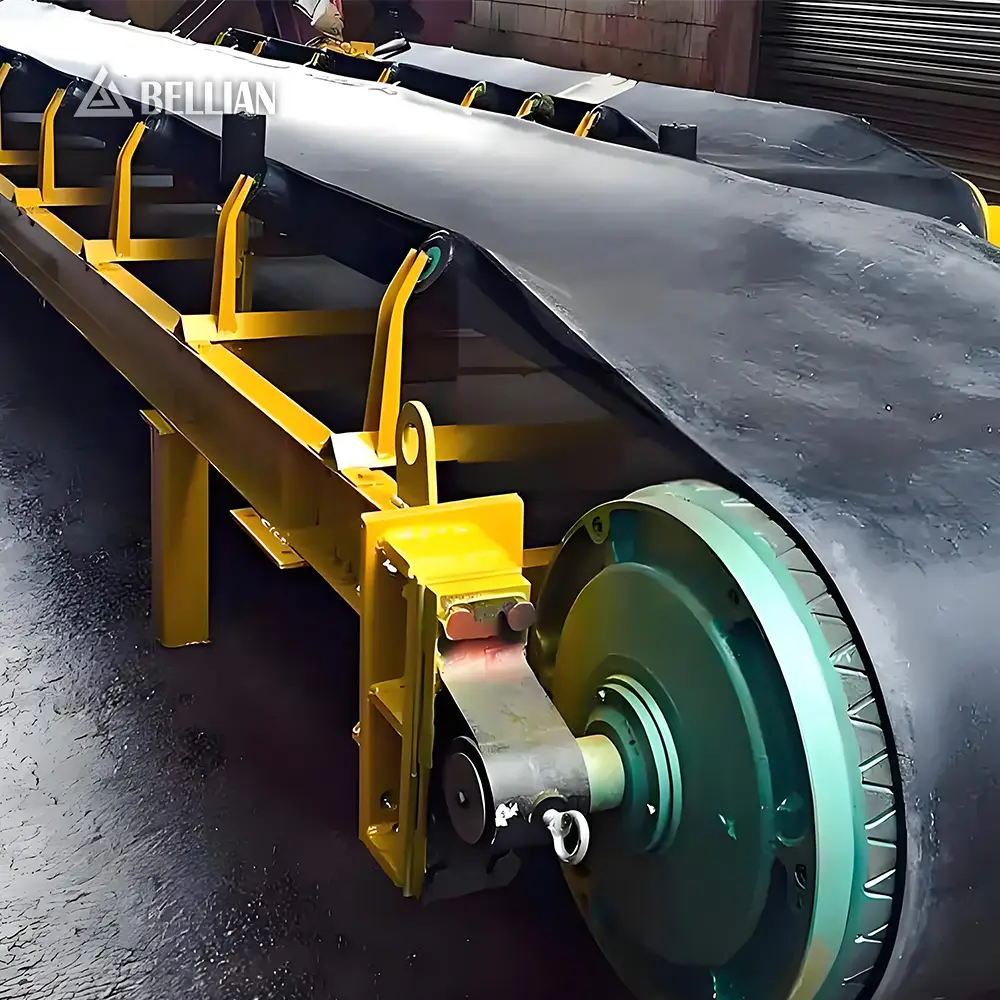
The belt conveyor mainly consists of frame, driving roller, return roller, conveyor belt, driving device and tensioning device. The conveyor belt is wound around the driving roller and return roller to form an endless belt. The driving device drives the driving roller to rotate, and the conveyor belt moves forward under the action of friction between the driving roller and the belt. Materials are fed onto the conveyor belt from the feeding end and transported to the discharge end. The tensioning device keeps the conveyor belt tight to prevent slipping.
Performance Features
Long transportation distance, can reach up to several kilometers, suitable for large-scale material handling
High transportation capacity, can transport up to 2000 tons of materials per hour
Low energy consumption, low operation cost, only 1/3 to 1/10 of truck transportation cost
Flexible layout, can be installed horizontally, inclined or combined with curves
High-quality rubber belt, strong wear resistance, long service life
Simple structure, reliable operation, easy maintenance, can realize automatic control
Technical Specifications
| Section Type | Belt Speed (m/s) | Belt Width B (mm) | |||||
| 500 | 650 | 800 | 1000 | 1200 | 1400 | ||
| Conveying Capacity G (t/h) | |||||||
| Trough | 0.8 | 78 | 131 | ||||
| 1.0 | 97 | 169 | 278 | 435 | 655 | 891 | |
| 1.25 | 122 | 206 | 348 | 544 | 819 | 1115 | |
| 1.6 | 156 | 264 | 445 | 696 | 1048 | 1427 | |
| 2.0 | 191 | 323 | 546 | 853 | 1284 | 1748 | |
| 2.5 | 232 | 391 | 661 | 1033 | 1556 | 2118 | |
| 3.15 | 824 | 1233 | 1858 | 2528 | |||
| 4.0 | 2202 | 2996 | |||||
| Flat | 0.8 | 41 | 67 | 118 | |||
| 1.0 | 52 | 88 | 147 | 230 | 345 | 469 | |
| 1.25 | 66 | 110 | 184 | 288 | 432 | 588 | |
| 1.6 | 84 | 142 | 236 | 368 | 553 | 756 | |
| 2.0 | 103 | 174 | 289 | 451 | 677 | 922 | |
| 2.5 | 125 | 211 | 350 | 546 | 821 | 111 | |
Application Scenarios
Widely used in mining, quarry, cement plant, power plant, port, chemical industry and other industries. Suitable for transporting various bulk materials such as limestone, coal, ore, sand, cement clinker, grain, etc. It is the most economical and efficient material handling equipment for long distance transportation.
Buying Guide
When choosing a belt conveyor, you should consider: 1. The type and properties of materials; 2. The required transportation capacity; 3. The transportation distance and inclination; 4. The site conditions and layout. We can provide customized solutions according to your specific requirements.
FAQ
What is the maximum transportation distance of the belt conveyor?
The maximum transportation distance of our belt conveyor can reach several kilometers. For long distance transportation, we can design multiple driving points to ensure stable operation.
Can the belt conveyor transport materials uphill?
Yes, the belt conveyor can transport materials uphill with maximum inclination of 18° for general materials. For special materials, we can use cleated belt to increase the inclination up to 30°.
What types of conveyor belts are available?
We provide various types of conveyor belts including general rubber belt, heat-resistant belt, cold-resistant belt, oil-resistant belt and wear-resistant belt. We will recommend the most suitable belt according to your material properties.
How to maintain the belt conveyor?
Regular maintenance includes checking the belt tension, lubricating the bearings, inspecting the rollers and cleaning the conveyor. We will provide detailed maintenance manual and training for your operators.